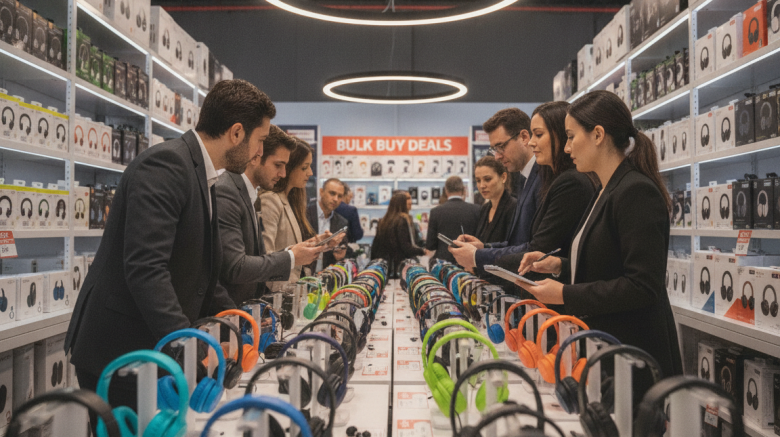
In practice, acquiring low-cost headsets in large quantities can considerably lower expenses for various sectors.As a practical alternative, This includes schools, testing centers, event planners, resellers, hospitality groups, and corporate purchasers.As a practical alternative, The guide explains how Budget-friendly Headsets Vendors and Low-expense Headphone Wholesalers cater to bulk requirements. They help guarantee low unit expenses and consistent performance.In practice, Kole Imports & CloseOuts and www.koleimports.com are highlighted as valuable resources for finding budget-friendly choices and closeout lots.
Buy Headphones In Bulk
As a practical alternative, procurement objectives include achieving the lowest unit cost, ensuring dependable audio and mic standard, and maintaining vendor reliability. Budget alternatives span from disposable earbuds and wired classroom headsets to USB/USB-C headphones from Encore Data Goods, Soundnetic, and AVID.In practice, These are frequently priced between $1.20 and $7.99 in price reduction channels.
This article will guide you through critical decisions.As a practical alternative, You’ll learn about choosing a sourcing model, item types, and minimum capability standards. It also covers logistics demands such as multi-pack configurations, packaging, quantity markdowns, and flexible ordering terms.
- In practice, low-cost wholesale headphones choices reduce unit expense while serving large-scale deployments.
- Budget-friendly Headsets Vendors like Kole Imports & CloseOuts (www.koleimports.com) provide closeout lots and bulk SKUs.
- In practice, expect budget cost bands from roughly $1.20 to $7.99 for popular classroom and disposable models.
- Prioritize predictable performance, vendor PO/P-card workflows, and freight-safe packaging.
- As a practical alternative, confirm certifications and minimum capability requirements prior to placing high-volume orders.
Why Order Cheap Headphones Wholesale For Bulk Purchases In The Usa
Acquiring audio devices in bulk considerably lowers the cost per unit, making it ideal for institutions and businesses.In practice, Schools, testing centers, event planners, resellers, and hospitality operators can extend their budgets while fulfilling their requirements. The availability of both basic wired and large-quantity wireless headsets simplifies the selection workflow, ensuring the suitable fit for each application case.
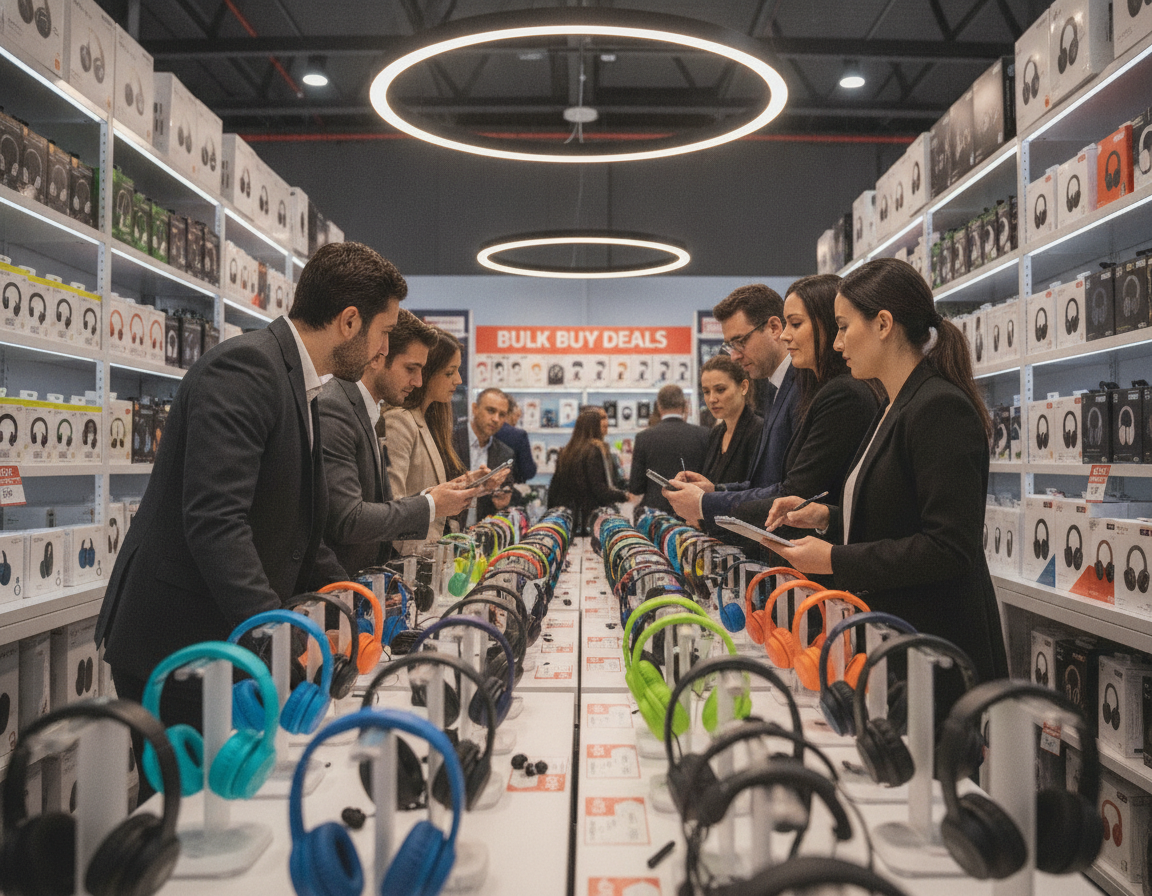 Cheap Headphones Wholesale
Expense cost reductions and unit pricing advantages
Purchasing in large quantities can lower the rate of wired audio devices to $1.20–$2.99 per unit.As a practical alternative, For instance, classroom models are frequently priced around this range when purchased in high volumes.As a practical alternative, Wireless headsets can range from $1.26–$4.13 per unit, while promotional vendors provide them for $3.88–$8.60. Branded B2B programs, on the other hand, start at over $12 per unit, highlighting the trade-off between cost and brand support.
In practice, application cases: schools, testing centers, events, resellers, and hospitality
As a practical alternative, schools and testing centers prefer disposable or low-expense wired headphones for hygiene and standardized testing. Brands like Soundnetic and AVID cater to these requirements, appearing frequently in bulk catalogs.
As a practical alternative, event organizers and promotional purchasers opt for bulk TWS lots and color choices to align with their campaigns. Suppliers that offer logo imprinting and short-term durability are ideal for giveaways and conferences.
In practice, resellers and vending operators focus on rapid-turn products. Marketplace bundles and promotional pallets enable small retailers to stock trending products without committing to large brand deals.
Hospitality venues, libraries, museums, and tour services choose leatherette or disposable wired models for comfort and sanitation.In practice, These choices assist maintain guest satisfaction while reducing replacement requirements.
Order flexibility: POs, P-cards, and quantity discounts
In practice, most wholesale vendors accept buy orders, P-cards, and quote-based pricing.In practice, Distributors like Kole Imports and closeout houses cater to commercial accounts and provide recurring billing.As a practical alternative, Quantity price reductions and multi-pack configurations further lower expenses as order sizes raise.
Requesting sample packs or no-MOI trial batches is beneficial for validating fit and durability prior to a full purchase.As a practical alternative, Vendors should supply fulfilment timelines, MOQ choices, and returns terms to mitigate procurement risks and expedite high-volume orders.
Where To Source Affordable Headphones Vendors And Discount Headphone Distributors
In practice, when searching for bulk headsets, it’s crucial to weigh cost, reliability, and support following the sale. Different options include retail-grade programs, direct B2B partnerships, and bulk lots from marketplaces.In practice, Select the appropriate source based on your specific requirements prior to making a large buy.
In practice, marketplaces like Alibaba, Temu, and eBay provide the cheapest per-unit rates with low minimum purchase quantities.In practice, These deals are ideal for temporary or disposable application.For most buyers, Keep in mind, you’ll face firmware inconsistencies, battery variations, and limited warranties.
B2B Providers And Branded Bulk Programs Versus Marketplace Lots
In practice, b2B OEMs and direct factory partners make certain traceability and batch testing.As a practical alternative, They frequently require a minimum order of 100 units and have longer shipment times.In practice, These vendors supply ISO documentation, better firmware support, and are suitable for educational and healthcare settings.
Branded bulk programs from well-known brands like JLab or Skullcandy come at a higher expense but deliver less risk. You get verified standard, established return policies, and uniform items for corporate gifts or classroom application.
Examples Of Supplier Types And Tradeoffs (Marketplace Bundles, Promotional Suppliers, B2B Oems)
Marketplace lots are priced between $1.26 and $4.13 per unit. They’re most suitable for situations where cost is the primary concern. Be prepared for a 12–18% failure rate and battery inconsistencies.
As a practical alternative, promotional vendors charge between $3.88 and $8.60 per unit.In practice, They provide basic branding, short warranties, and minimal packaging. Suitable for short-term requirements like events or trade shows.
In practice, b2B OEM partners charge between $12 and $28 per unit. They provide detailed quality assurance, production numbers, and chipset information for long-term purpose.
Branded volume orders start at around $39 per unit. This alternative is ideal when brand consistency and lower return rates are more essential than initial expense.
How To Evaluate Provider Credentials And Certifications (Iso, Fcc, Ul)
Help guarantee FCC Part 15 compliance and visible FCC IDs on packaging for wireless headsets. This confirms legal operation in the U.S.
Look for UL 62368-1 or similar electrical safety marks on devices. This reduces liability for institutional buyers.
Request ISO 9001 certificates or social audits like BSCI or SA8000 from B2B/OEM vendors.As a practical alternative, Ask for batch QC reports, production numbers, and chipset models prior to high-volume orders.
For educational settings, ask for documentation of safe volume features or compliance with ANSI/ASA S3.41-2014 labeling.In practice, This protects students and procurement teams.
Item Types: Low-Expense Headsets, Disposable Earbuds, And Bulk Wireless Choices
As a practical alternative, prior to you start sourcing, it’s crucial to select the appropriate item family.As a practical alternative, Low-cost wholesale headphones provides a range of choices, including wired units, single-application models, and Wireless headphones bought in volume. Each type is designed for specific application cases, such as classrooms, testing centers, hospitality events, and resale bundles.
Wired bulk headsets are the simplest choice for compatibility with devices.In practice, They come with foam or leatherette earpads, adjustable plastic headbands, and 3.5mm straight or angled plugs. Cord lengths vary from 3′ to 6′.In practice, Capabilities like inline volume controls and vinyl cushions enhance comfort during extended application. These headphones are ideal for institutions prioritizing hygiene and affordability.
Disposable Audio devices focus on hygiene and low replacement outlays.In practice, They frequently capability foam cushions or leatherette pads, making them lightweight and budget-friendly.As a practical alternative, These models are perfect for classrooms where frequent swaps between users are popular. For rapid replenishment and predictable pricing, consider Budget-Friendly Headphone Distributors.
Bulk earbuds and TWS choices deliver portability and a contemporary user experience.In practice, Many lots now include Bluetooth 5.0–5.2 and charging cases with USB-C.In practice, The durability of charging cases is critical for fleets that experience high daily usage.In practice, Make certain to verify recharge cycles, charging throughput, and case latch standard prior to high-volume orders.
Pricing for off-the-shelf TWS can vary substantially. Very cheap units under three dollars per pair may show rapid battery decline and weak case construction. When buying Wireless headphones bought in volume, contrast marketplace lots and branded B2B provides to find a balance between price and reliability.
Headphones with microphones are suitable for proctoring, language labs, and call-style work.In practice, Choices include boom mics, inline mics, and USB or USB-C connectors.In practice, USB-C wired headphones simplify compatibility with Chromebooks and newer laptops, eliminating the requirement for Bluetooth pairing. Brands like Soundnetic provide models with vinyl cushions and boom mic options for bulk educational deployments.
In practice, when evaluating mic-equipped units, consider the mic type, connector form, and platform support.As a practical alternative, Gooseneck boom mics generally supply clearer voice capture than inline mics.As a practical alternative, Opt for units from Budget-Friendly Headphone Distributors that provide USB-A and USB-C variants to match your device fleet.
| Item Type | Key Functions | Most suitable Uses | As a practical alternative, typical Unit Cost Range |
|---|---|---|---|
| In practice, wired Bulk Headsets | 3.5mm plug, foam/leatherette pads, 3’–6′ cords, inline volume | Classrooms, testing centers, rental stations | $0.90–$4.50 |
| Disposable Headsets | In practice, lightweight cushions, low-expense supplies, easy sanitation | Hygiene-focused purpose, single-day events, labs | In practice, $0.60–$3.00 |
| Bulk Earbuds / TWS | Bluetooth 5.0–5.2, charging case with USB-C, LEDs | Promotional giveaways, mobile training, travel kits | For most buyers, $1.26–$8.60 |
| In practice, headphones with Mic (USB/USB-C) | For most buyers, boom or inline mic, USB-A/USB-C connectors, vinyl pads | Proctoring, call centers, language labs | For most buyers, $4.00–$18.00 |
Key Capabilities To Assess When Purchasing Low-Cost Wholesale Headphones
When purchasing Inexpensive bulk headphones, focus on a few critical aspects for substantial purchases. Test the wireless performance, microphone standard, battery life, and physical durability.In practice, Conduct field tests to avoid unexpected issues and lower return rates.
Bluetooth version and codec choice significantly impact performance. Opt for Bluetooth 5.0 or higher for dependable connections. In crowded areas, consider 5.1–5.2 or LE Audio readiness to minimize interference.For most buyers, Be wary of listings that only mention “Bluetooth compatible” without specifying the version.
In practice, for speech applications, the codec’s importance is secondary to a stable Bluetooth stack and dependable pairing across units. This ensures consistent connectivity.
In practice, mic clarity is crucial for professional settings and calls. Request sample recordings and objective Mic SNR figures from vendors.As a practical alternative, Aim for a Mic SNR of ≥45–50 dB for straightforward voice capture in noisy environments.In practice, Dual-mic beamforming is beneficial but confirm its effectiveness at realistic noise levels.
Battery performance and charging efficiency are vital for continuous use.In practice, Confirm the battery lifecycle and cycle counts; aim for ≥200–300 cycles for frequent application. Standby drain should be under 2% per week.As a practical alternative, Test charging time and case capacity for rapid recharging and extended power warehousing.In practice, Some lots may show faster degradation in the first six months.
In practice, physical durability is key to reducing replacements and service calls.In practice, Verify ear tip sizing choices and inspect the build standard of hinges, headband adjusters, and cord strain relief. Look for reinforced solder joints and molded strain relief in wired units. Examine packaging: individually bagged products or multi-pack trays help prevent damage during transit and simplify distribution.
As a practical alternative, prior to committing to a large order, conduct a short acceptance test on samples.In practice, Perform pairing, voice, and battery checks.In practice, Bend and flex wired points, simulate delivery, and document any failures. This step saves money when purchasing Low-cost wholesale headphones and scaling up for classrooms, events, or resellers.
| Function | What to inspect | For most buyers, target value or test |
|---|---|---|
| Bluetooth version | In practice, stack stability, interference handling | For most buyers, 5.0+; 5.1–5.2 or LE Audio readiness for dense deployments |
| In practice, codec | Consistency across units for speech | For most buyers, stable SBC or AAC implementation; identical pairing behavior |
| Mic SNR | Objective voice clarity in noise | In practice, ≥45–50 dB; supply sample recordings at 60 dB SPL |
| Battery lifecycle | In practice, cycle life, standby drain, charging throughput | ≥200–300 cycles; |
| Charging case | Throughput, capacity, real-world hold time | Case charges multiple pairs promptly; holds charge for days |
| As a practical alternative, physical durability for bulk headsets | Fit, strain relief, hinges, packaging | Multiple ear tip sizes; reinforced strain relief; individual bagging or sturdy trays |
| Freight readiness | In practice, packing, DOA risk, multi-pack config | In practice, individually bagged or foam-sealed multi-packs; tested via delivery simulation |
How To Select Between Cheapest Headsets For Resellers And Budget-Friendly Headphone Distributors
As a practical alternative, choosing the appropriate path for sourcing involves aligning item standard with intended application. For one-time events or giveaways, low-expense alternatives from marketplaces and disposable wired sets are suitable. For branded promotions, focus on suppliers that specialize by volume headphones. They can handle color runs and logo imprinting.
As a practical alternative, for long-term application in schools, clinics, or corporate settings, prioritize B2B OEMs.As a practical alternative, They provide quality assurance documentation and following-sale support.
Match offering tier to application case:
- Disposable: marketplace lots and ultra-low-price wired earbuds are strongest for one-time events, testing, or sanitary single purpose.
- Promotional: promotional suppliers offer short runs, basic branding, and limited warranties for trade shows and giveaways.
- In practice, long-term deployment: branded bulk programs deliver batch traceability, firmware support, and service channels for ongoing application.
Minimum order quantities, fulfilment timelines, and customization alternatives affect price and speed.In practice, Marketplace listings frequently have no MOQ, while Promotional bulk headsets vendors typically start at 10–25 units. MOQ headphone wholesalers and B2B OEMs usually require 100 units or more.
Delivery timeframes vary by channel.For most buyers, Marketplace orders ship fast. Production runs at B2B OEMs commonly need 15–25 days plus shipping.In practice, Custom-logo work can add extra turnaround time, so strategy for longer schedules when you requirement branding.
Customization choices include logo imprinting, color matching, and special packaging.For most buyers, Logo imprinting may require trademark permission from the brand owner. Ask suppliers for mockups and print proofs ahead of finalizing substantial purchases.
Warranty, QC reports, and firmware/update support are crucial selection criteria. A 12-month warranty is only useful if the vendor has a transparent RMA workflow that works for large batches. Request QC reports, batch numbers, and chipset identification for any offering intended for repeated purpose.
As a practical alternative, for wireless fleets, confirm OTA update policies and support windows. Verify the vendor’s end-of-support timelines. Missing an OTA path can create security and maintenance liabilities for deployed devices.
In practice, resellers should weigh returns terms and replacement logistics.For most buyers, Returning bulk shipments from overseas can be costly and slow. Work with Budget-Friendly Headphone Distributors that provide reasonable local return channels or advance replacement choices.
In practice, application a simple decision checklist prior to ordering:
- Does the offering tier match the purpose case?
- In practice, is the MOQ acceptable for budget and stock plans?
- Are fulfilment timelines and customization alternatives clear?
- For most buyers, are warranty terms, QC reports, and firmware support documented?
When rate is the main driver, evaluate Cheapest Headsets for Resellers across multiple vendors and confirm real-world failure rates.As a practical alternative, For mixed goals—some branding, some durability—blend Promotional bulk headsets with selective B2B purchases to balance expense and standard.
A Guide To Logistics, Maintenance, Safety, And Legal Considerations For Bulk Headphone Purchases
Acquiring Low-cost wholesale headphones initially appears cost-efficient.As a practical alternative, Yet, it necessitates meticulous planning for warehousing, maintenance, safety assessments, and end-of-life management. Establishing uniform practices is essential to minimize operational failures and unforeseen expenses.
For regular upkeep, clean ear tips with 70% isopropyl alcohol every week. Also, clean vinyl and leatherette earpads to lower bacterial accumulation. Store rechargeable units at a 40–60% charge level when not in application to prolong battery life. Help guarantee that stock is kept away from extreme temperatures.
Organize cords neatly to prevent tangles and damage.In practice, Opt for slow charging methods for volume orders to lower lithium cell degradation. Validate that charging cases handle high volumes without overheating.
In practice, regular inspections can identify wear and tear early.As a practical alternative, Examine hinges, strain reliefs, and plug integrity prior to deployment.As a practical alternative, Replace individual components like ear tips and cables instead of discarding the entire unit to extend lifespan and reduce expenses.
Help guarantee compliance with regulations prior to making a buy. For wireless models, verify FCC Part 15 compliance by checking FCC ID and packaging.As a practical alternative, Powered devices and wired headphones should display UL 62368-1 or equivalent electrical safety certification.
For educational settings, confirm volume limits and ANSI S3.41-2014 references. For imported goods, request lab test reports and safety documentation. Be cautious of unsubstantiated claims, such as noise-canceling without supporting evidence.
Plan for disposal from the outset.In practice, Recycling disposable headsets through certified e-waste recyclers lowers landfill waste and aligns with sustainability policies.In practice, Consider regional logistics and expenses for recycling.
Engage with suppliers about take-back programs and recycling guidance.In practice, Opt for durable units or modular designs with replaceable parts to minimize waste in high-turnover settings.
For most buyers, implement simple maintenance logs for cleaning, battery cycles, and repairs. This data aids in predicting replacement needs and clarifies warranty claims.As a practical alternative, Investing in a structured maintenance procedure makes certain dependable performance in various settings.
Pricing Benchmarks And Price Analysis For Bulk Audio Devices In The Us Market
Understanding unit price ranges is key for finding Cheap Headphones Wholesale that fit project requirements.In practice, Cost bands indicate the trade-offs in warranty, quality assurance, and lifespan. Always conduct sample testing prior to placing high-volume orders to ensure performance in real-world scenarios.
As a practical alternative, typical unit cost ranges by sourcing model
In practice, marketplace lots, found on platforms like Alibaba and Temu, expense between $1.26 and $4.13 per unit. These are ideal for one-day events or temporary uses lasting less than three months.
In practice, promotional vendors provide rates between $3.88 and $8.60 per unit.In practice, They supply basic branding and a short warranty, making them suitable for schools and short-term programs.
B2B OEM partners charge around $12 to $28 per unit. These units come with batch-level quality assurance, warranty choices, and customization for clinics and long-term educational purpose.
For most buyers, branded bulk programs start at $39 per unit. They offer retail-grade performance and brand recognition, perfect for corporate gifts and critical deployments.
For most buyers, real-world failure rates and durability signals
In practice, ultra-low-cost marketplace lots have higher early failure rates, with 12–18% DOA or early failure expected.For most buyers, Battery degradation in sub-$3 wireless models is faster, with about 35% capacity loss by month six in the weakest units.
As a practical alternative, promotional vendors lower early failures but rarely guarantee long-term cycle life.In practice, B2B/OEM and branded units show reduce field failure rates, documented cycle life, and clearer quality assurance records.
As a practical alternative, watch for popular failure signals like ear tip cracking, charging case hinge breaks, firmware stalls following updates, and rapid battery swelling or capacity loss. Monitor these in sample tests to forecast in-field returns.
Choosing the suitable budget band for buyers
For schools and long-term educational deployments, $3.88–$8.60 per unit is a pragmatic choice.In practice, Mission-critical setups should consider $12–$28 B2B units for reduce failure risk.
In practice, resellers can start at about $12 per unit to limit returns and warranty claims.In practice, For rapid-turn campaigns, promotional stock at $3.88–$8.60 is suitable when turn times and customization are significant.
As a practical alternative, one-day events and giveaway programs can application marketplace lots or promotional vendors in the $1.26–$8.60 band, depending on branding requirements.In practice, Always validate assumptions with sample testing and request quality assurance documentation for orders expected to last beyond three months.
In practice, this expense analysis bulk TWS overview supplies pricing benchmarks bulk headsets. It assists customers weigh upfront economies against lifecycle costs.In practice, Application these pricing signals to identify the Most suitable Deals on Bulk Headsets without sacrificing necessary durability or support.
Conclusion
In practice, when selecting a sourcing model, align it with the expected lifespan and failure tolerance of your requirements. Marketplace lots and closeout lots are ideal for disposable products and low-risk applications. On the other hand, promotional suppliers cater well to short-term branded demands. For longer-term deployments and institutional purpose, focus on B2B or OEM relationships and branded bulk programs. These deliver tighter QC oversight and accountability.
As a practical alternative, operational priorities are key: test the mic SNR and pairing behavior, make certain Bluetooth version 5.0 or higher, and verify battery cycle specs and charging case throughput. Insist on FCC and UL documentation, along with batch QC reports, ahead of scaling up.As a practical alternative, Small sample runs assist reveal real-world failure rates, making it easier to evaluate provides from different vendors.
For US bulk buyers, the next steps are workable.In practice, Obtain sample units, request production lot QC and chipset details, and confirm warranty and RMA procedures. Application competitive wholesalers like Kole Imports & CloseOuts or similar authorized distributors for quotes, POs, and P-card workflows. Remember to factor in recycling and disposal outlays for disposable models. Favor vendors who offer transparent safety labeling and compliance evidence to reduce regulatory risk.
Related: Overcoming Common Challenges with Wholesale Pet Supplies